A Last Name Is a Poor Succession Plan

The Bible should make us cautious about handing ministries to our children. Read the history of Israel's kings, and you find repeated trouble when leadership moves from father to son. A family may know how to preserve its place at the center of an organization while losing sight of the people God has entrusted to its care.
I understand the appeal of a family succession. A son may have grown up around the ministry, know its people, and share his father's convictions. For a board that loves the founder and wants the work to continue, choosing someone familiar can feel reassuring. That reassurance deserves to be tested before it becomes a decision.
Israel's monarchy, including Judah after the kingdom divided, gives us plenty to think about. These kings lived under a covenant and a form of government different from a ministry board's responsibilities today. Even so, their stories ask hard questions about character and the way leaders use authority.
David's family had a succession crisis
By the opening of 1 Kings, David is old, and his son Adonijah is positioning himself to become king. He gathers support and holds a feast while leaving Solomon and several of David's trusted leaders out. Nathan and Bathsheba intervene, and David orders Solomon's anointing before Adonijah's claim becomes the accepted future (1 Kings 1).
The text also tells us something about David's relationship with Adonijah: he had never challenged his son's conduct by asking why he behaved as he did. I find that detail painful. A father can love his son and still leave him poorly prepared for responsibility when that relationship has made correction difficult.
That should concern a board considering the founder's child. Ask how the candidate receives correction and who has been willing to give it. Look for evidence that the person can hear a difficult truth without turning the conversation into a test of loyalty to the family.
Rehoboam inherited people who were hurting
When Solomon's son Rehoboam comes to power, the people ask him to lighten the burden his father placed on them. The older advisers urge him to serve the people and answer them kindly. He rejects their counsel and follows the advice of the younger men who grew up with him, threatening an even heavier burden (1 Kings 12:1–16).
The kingdom divides. Scripture places that rupture within God's judgment on Solomon's unfaithfulness, so the story carries more than a lesson about choosing advisers (1 Kings 11:9–13). Still, Rehoboam's response shows us a leader using his new authority to increase the pressure on people who had asked to be heard.
A successor can inherit the effects of decisions made long before the handoff. Before you appoint the next leader, listen to what the staff and people you serve have been carrying. Give the incoming leader an honest account of those concerns and enough room to address them, including problems connected to a respected predecessor.
A faithful father still needs a faithful successor
Hezekiah removed places of idol worship and is commended for trusting the Lord. His son Manasseh rebuilt what his father had torn down and led Judah into grave evil (2 Kings 18:3–6; 21:1–9). Whatever confidence people might have drawn from Manasseh's family history, his own decisions had devastating consequences.
There are healthier examples. Jehoshaphat followed his father Asa and did what was right in the Lord's eyes, even with failures remaining in his reign (1 Kings 22:41–43). Scripture gives us reason to examine each leader's faithfulness carefully. Family history alone leaves too much unanswered.
For a ministry board, that means assessing the person in front of you. What have you seen when they carry real responsibility? How do they treat people who have little influence, and what happens when their judgment is questioned? Those observations give your decision substance beyond affection for the family.
Give the family an honest process
A founder's son deserves the freedom to discern his calling without an organization waiting for him to accept it. He may be well suited to lead. He may also feel the weight of disappointing his father or people who have assumed the job would eventually be his. Make room for an honest answer before expectations become promises.
Three first steps for your board
Agree on what the next leader needs to do. At your next board meeting, write down the responsibilities of the role and what the ministry will need in the years ahead. Listen to staff concerns as you do this. Those expectations give you a fair basis for assessing any candidate, including the founder's son.
Give the family room to speak honestly. Meet separately with the founder and potential successor to hear what each hopes for and what concerns them. Ask whether the son actually wants the role and whether the father is ready to release it. Include spouses in conversations about the changes that will affect their lives at home.
Put a preparation plan in writing. Identify responsibilities the potential successor can begin carrying and set a date to review what everyone is learning. If the handoff moves forward, clarify who will make decisions and how disagreements will be handled. Include support for the outgoing leader as he prepares for life beyond the role.
You may find that a few honest conversations bring clarity, or that having someone outside the family helps everyone speak freely. If you'd like to talk through where to begin, we're here at MinistryTransitions.com.
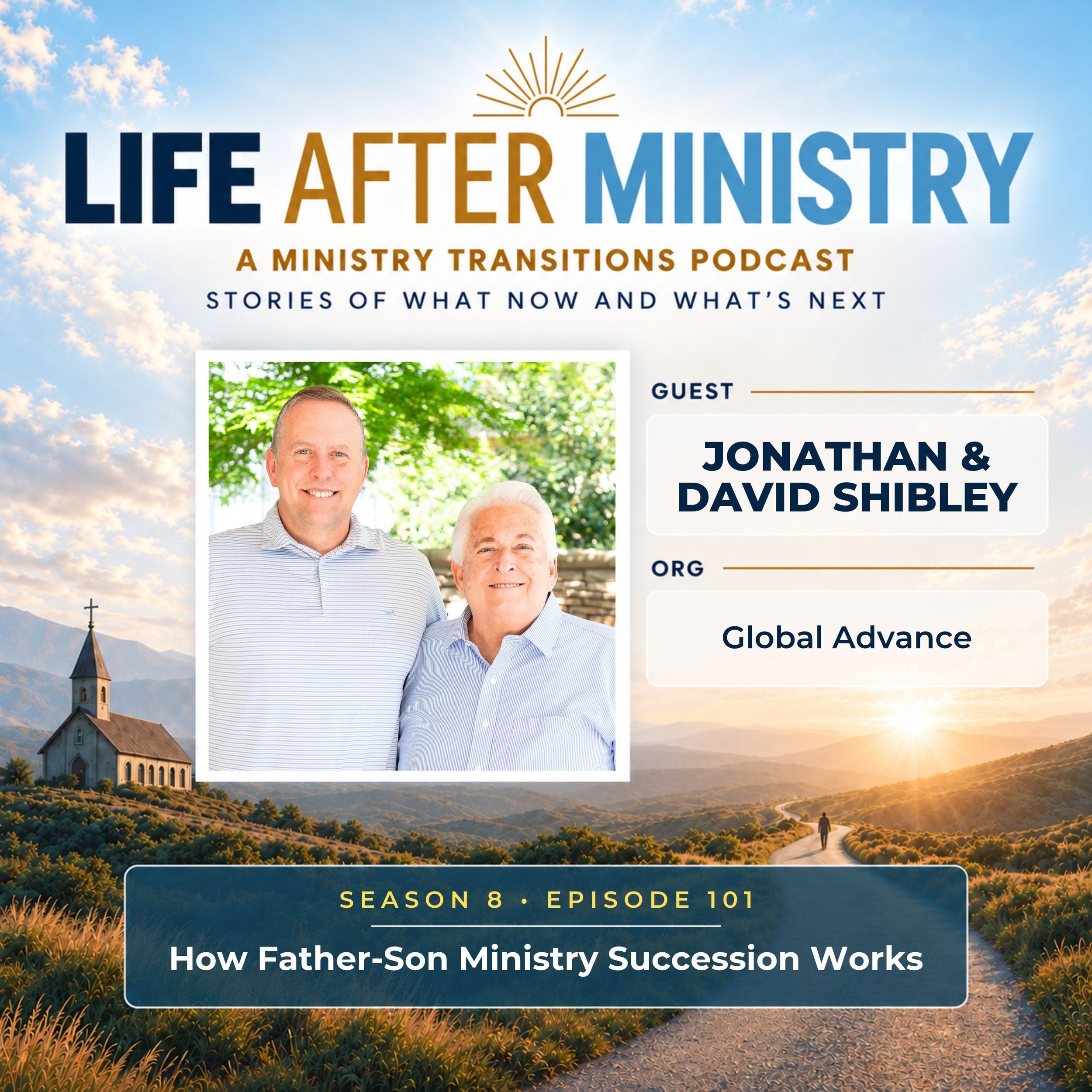
For more on what a healthy father-son transition can look like, listen to my conversation with David and Jonathan Shibley of Global Advance on Life After Ministry. We talk about the choices that gave Jonathan room to lead and David meaningful work beyond the presidency.

Matt Davis served as a Teaching and Executive Pastor for more than two decades in Orange County, California. After going through his own pastoral transition out of ministry, Matt learned the difficulty of this season. He helped start Ministry Transitions, a ministry committed to helping ministry leaders navigate transitions with grace. As President, he seeks to bring healing a reconciliation to churches and their people.