Succession Is the Transfer of Trust

When organizations talk about succession, they often focus on the role. Who will replace the current leader? Does the next person have the necessary skills? Can they manage the responsibilities, lead the team, and continue the mission?
Those questions matter, but they are incomplete.
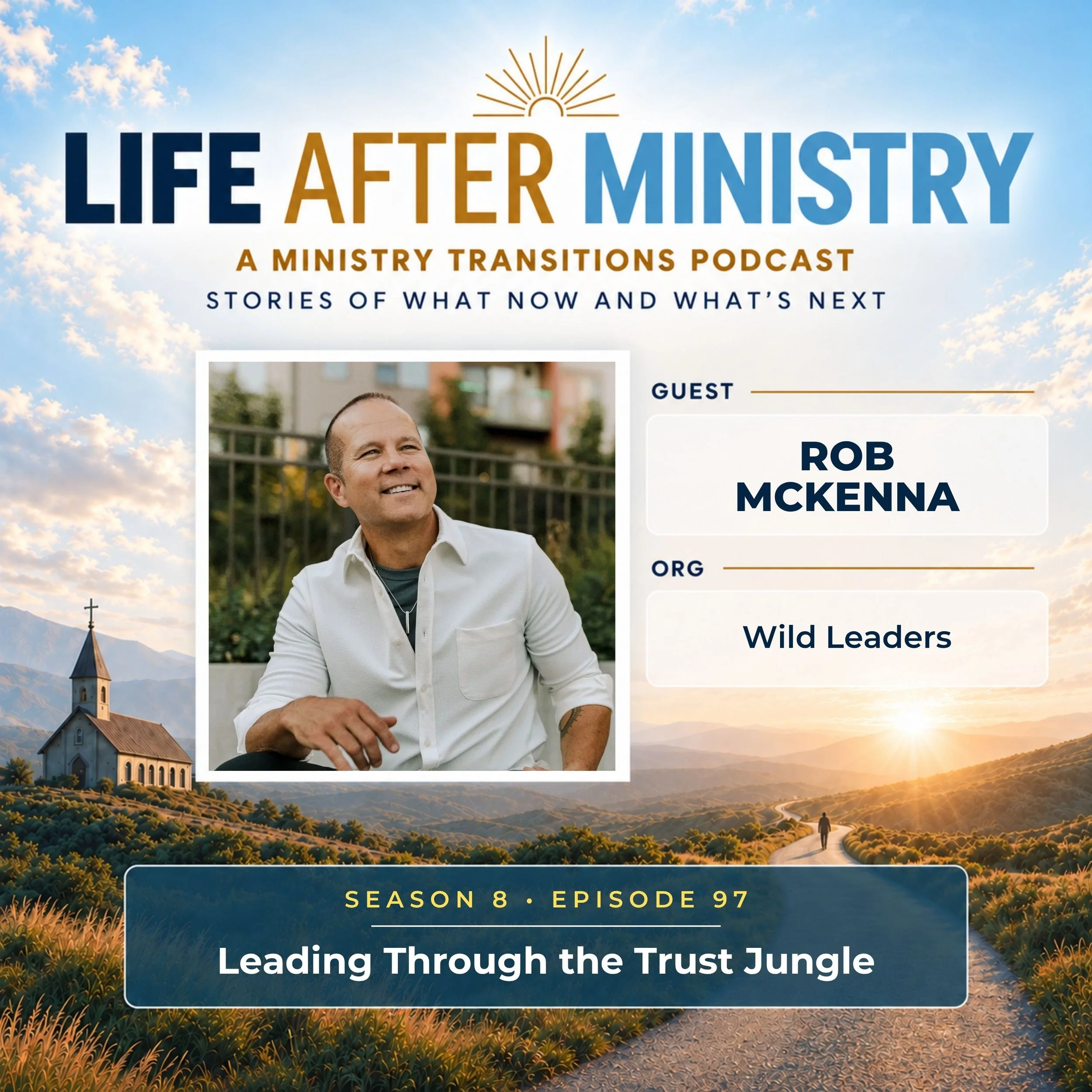
Dr. Rob McKenna suggests that succession is better understood as the transfer of trust. A new leader is not merely stepping into a job description. They are stepping into a network of relationships, expectations, history, and organizational culture.
That distinction helps explain why some leadership transitions struggle even when the incoming leader is capable. The problem may not be that the new leader lacks competence. They may be stepping into a team where trust is already fractured, communication is unclear, or people have learned to hide what they really think.
Trust is often treated as a feeling, but McKenna argues that it has a recognizable structure. Competence is part of it. People need to believe that their leaders can do the work and meet the responsibilities of the role. But competence alone is not enough. Trust also depends on reliability, candor, emotional maturity, and a genuine concern for others.
This is particularly important in churches and nonprofits, where people may assume trust should be automatic because the organization is built around a shared mission. But ministries are still made up of imperfect people. They experience conflict, disappointment, failure, misunderstanding, and change. Calling an organization a family does not eliminate those realities.
Healthy organizations learn how to repair.
Repair begins with honesty. Leaders must be willing to examine their own behavior and acknowledge the blind spots that others may see more clearly than they do. A 360-degree review can reveal important patterns, but lasting change requires more than receiving a list of observations. It requires deeper formation—understanding the motivations, assumptions, and habits beneath the behavior.
That process takes courage. Honest conversations can be risky, especially for people who do not hold formal power within an organization. But individuals can still begin by developing greater self-awareness, measuring the risks they are willing to take, and seeking opportunities for candid conversations with people who have influence.
McKenna identifies three questions every team member is asking:
Do I matter?
Are you telling me the truth?
Do I belong here?
When people believe the answer is yes, they are more likely to engage the work itself. When the answer is no, they may spend more energy trying to look like they matter, look like they belong, or look like they are being told the truth.
Those questions are not simply employee-satisfaction questions. They reveal the relational infrastructure of an organization. They help leaders understand whether people are actually able to contribute, speak honestly, and work toward the mission together.
Trust will never mean perfection. Even healthy organizations contain fractures. But strong organizations do not ignore those fractures or pretend they are not there. They create systems where people can name problems, take responsibility, receive feedback, and move toward repair.
That is what makes succession more than replacement. The goal is not simply to find someone who can occupy the next position. The goal is to prepare a leader to enter a healthy, honest, and continually repairing stream of trust—and to help preserve and strengthen that trust for the people who come next.

Matt Davis served as a Teaching and Executive Pastor for more than two decades in Orange County, California. After going through his own pastoral transition out of ministry, Matt learned the difficulty of this season. He helped start Ministry Transitions, a ministry committed to helping ministry leaders navigate transitions with grace. As President, he seeks to bring healing a reconciliation to churches and their people.