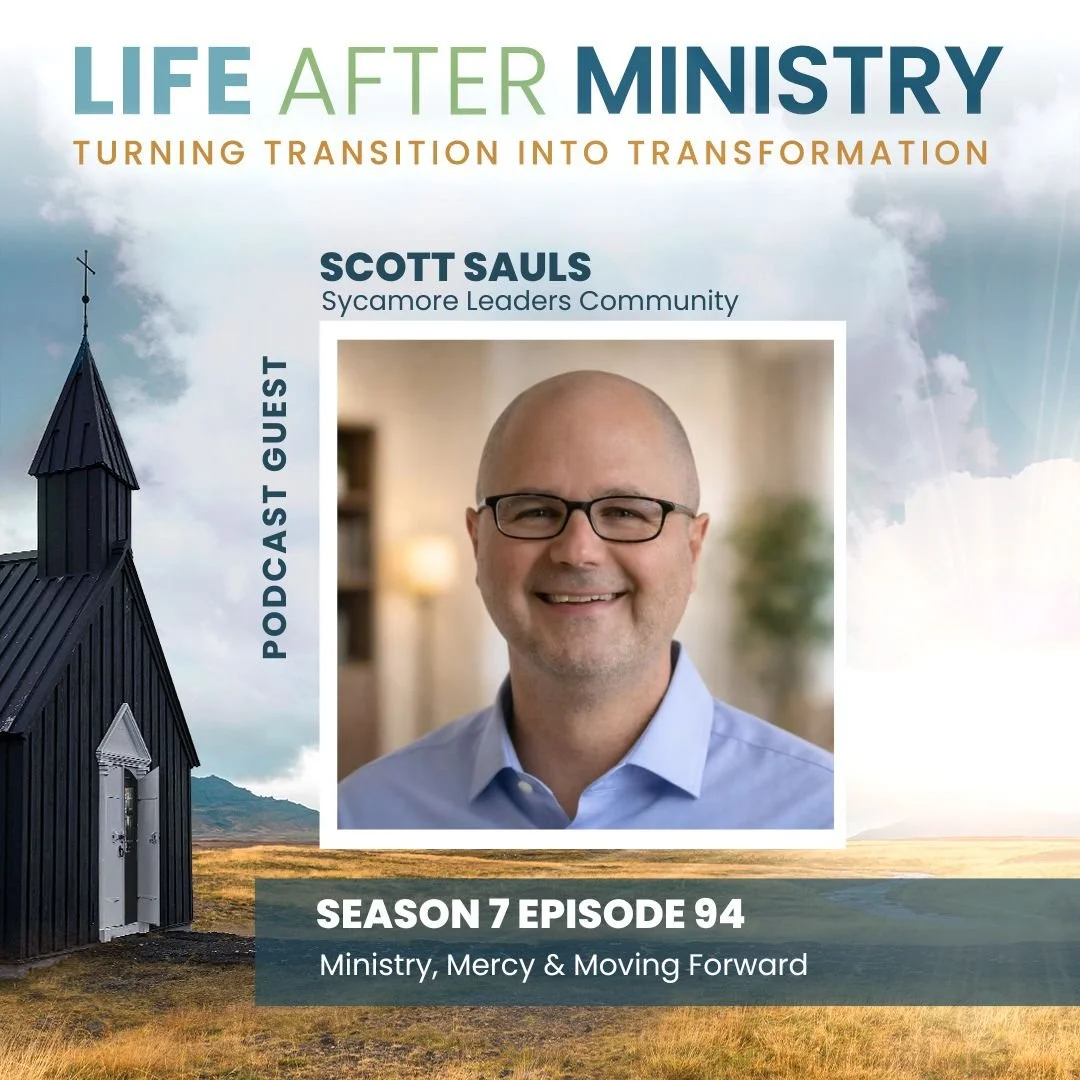
When the Story Doesn't End the Way You Planned

Very few ministry leaders imagine leaving their church differently than they envisioned.
Some expect to retire after decades of faithful service. Others picture handing leadership to a trusted successor while celebrating together with the congregation they love.
Reality is often more complicated.
Leadership disagreements arise. Organizational priorities shift. Seasons become difficult. Sometimes a transition arrives unexpectedly, leaving leaders trying to process questions they never anticipated asking.
What now?
For many, the first emotion is grief.
That grief is understandable.
Pastoral ministry is deeply personal. Leaders invest years into preaching, counseling, mentoring, celebrating weddings, grieving funerals, and walking with people through every season of life. The ministry becomes woven into their identity.
When that chapter closes, it can feel like losing part of yourself.
Yet many leaders describe another emotion alongside grief.
Relief.
Relief from relentless expectations.
Relief from constant responsibility.
Relief from carrying the emotional weight of hundreds or thousands of people.
These emotions are not contradictory.
They often exist together.
Understanding this helps normalize what many leaders experience during ministry transitions. Feeling relief does not diminish the love you had for your church. Feeling grief does not mean the transition was necessarily wrong.
Both emotions simply acknowledge that something meaningful has ended.
One of the greatest challenges during this season is identity.
For years, introductions may have begun with the words, "I'm the pastor of..."
Without realizing it, a role can slowly become inseparable from a person's sense of worth.
This is not unique to pastors.
Executives experience it.
Business owners experience it.
Nonprofit leaders experience it.
Anyone who has invested deeply in meaningful work faces similar questions when that work changes.
Who am I now?
Healthy ministry transition consulting often begins with that question rather than career strategy.
Because until identity is settled, every next step feels uncertain.
Scripture reminds us that our primary identity is never found in our position.
Before Jesus began His public ministry, before He performed miracles or preached sermons, the Father declared, "This is my beloved Son."
Identity preceded assignment.
The same remains true for us.
We belong to God before we accomplish anything for Him.
Another important lesson many leaders discover after transition is the difference between professional relationships and genuine friendships.
Leadership naturally attracts people.
Meetings fill calendars.
Conversations happen constantly.
Yet many of those relationships exist because of the role.
When the role changes, many of those connections naturally change as well.
This can feel deeply personal.
It is also an invitation to cultivate friendships rooted in mutual love rather than shared responsibility.
Healthy leaders need people who know them apart from their platform.
People who ask about their soul before asking about their ministry.
People who remain present regardless of job title.
This kind of community becomes invaluable during seasons of uncertainty.
Transition also creates opportunities to examine unhealthy patterns.
Many ministry leaders quietly struggle with work addiction.
Because ministry is meaningful work, overworking often appears virtuous.
Long hours become badges of honor.
Constant availability is celebrated.
Rest feels selfish.
Eventually, however, the pace becomes unsustainable.
Relationships suffer.
Health declines.
Joy disappears.
Sometimes transition becomes the first opportunity to confront these realities honestly.
Though painful, that process can become profoundly healing.
Leaders often rediscover rhythms of rest, prayer, friendship, and presence that had been crowded out by relentless activity.
These practices create space for God to rebuild what constant productivity could never provide.
Perhaps one of the most hopeful truths about transition is that calling often survives the change.
The setting changes.
The mission remains.
A pastor may no longer preach weekly but still shepherd people deeply.
A ministry leader may no longer oversee an organization but continue investing in emerging leaders.
God rarely wastes decades of preparation.
Instead, He often redirects those experiences toward new opportunities for Kingdom impact.
That perspective transforms transition.
Instead of asking, "What did I lose?"
Leaders begin asking, "How might God use what He's already formed in me?"
That shift opens the door to hope.
It reminds us that endings are often invitations into something new.
Not because every transition is easy.
But because Christ remains faithful in every season.
The story may not unfold according to our plans.
Yet God's faithfulness continues long after one chapter ends and another begins.

Matt Davis served as a Teaching and Executive Pastor for more than two decades in Orange County, California. After going through his own pastoral transition out of ministry, Matt learned the difficulty of this season. He helped start Ministry Transitions, a ministry committed to helping ministry leaders navigate transitions with grace. As President, he seeks to bring healing a reconciliation to churches and their people.