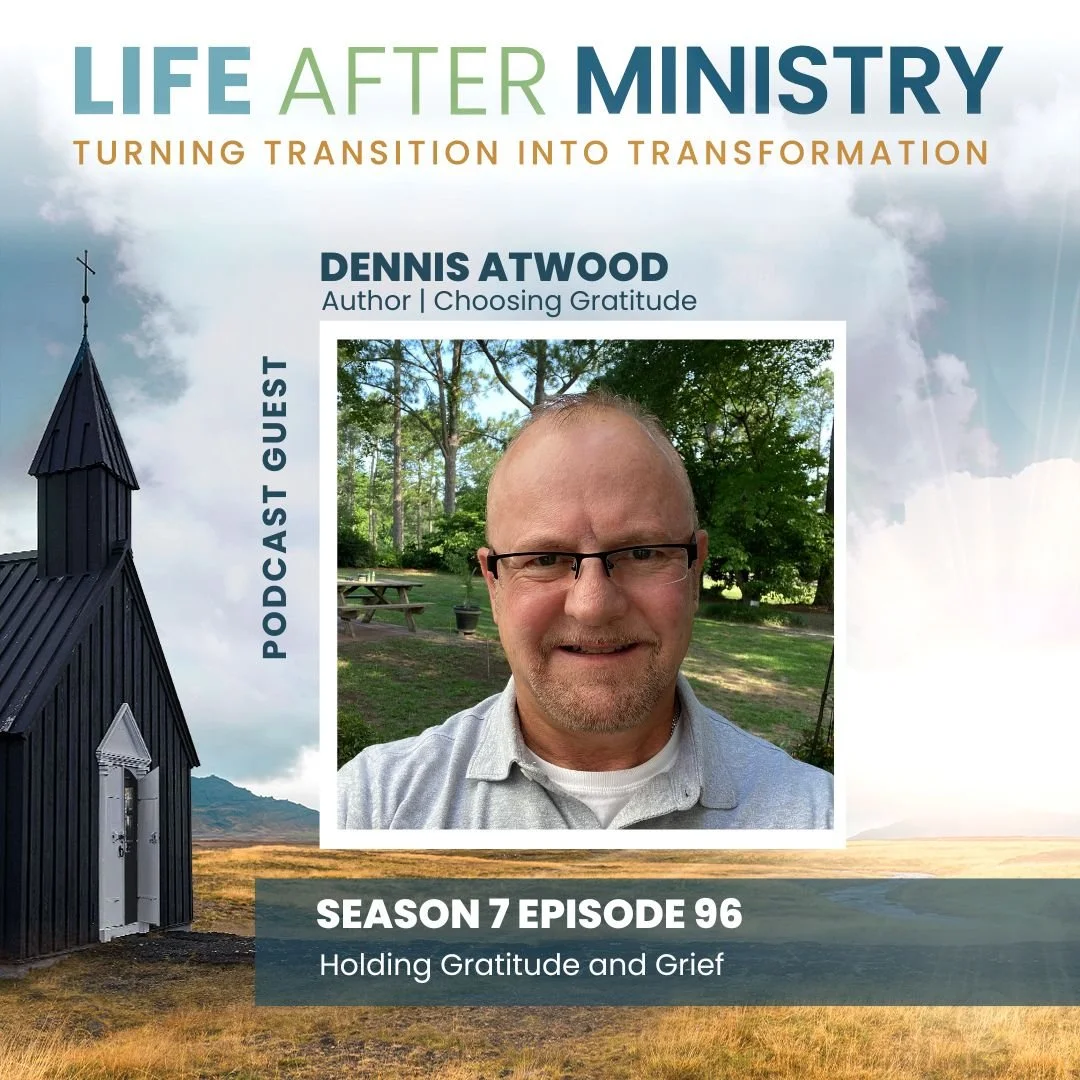
When Your Ministry Ends Before You're Ready

Few ministry leaders expect illness to become part of their transition story.
Most imagine a thoughtful succession plan, a gradual handoff, or a retirement celebration after decades of faithful service. They assume there will be time to prepare emotionally, financially, and spiritually for whatever comes next.
Sometimes there isn't.
A diagnosis arrives unexpectedly.
A stroke changes everything.
A chronic illness slowly limits what once came naturally.
In a matter of months, a leader who once preached every Sunday, visited hospitals, and shepherded a congregation begins asking a question they never imagined facing.
Who am I if I can no longer do what God called me to do?
That question reaches far deeper than employment.
For pastors and ministry leaders, calling and identity often become closely connected. Years of serving people, studying Scripture, leading organizations, and caring for congregations shape not only what they do but how they understand themselves.
When ministry suddenly ends, it can feel as though part of that identity disappears as well.
That loss deserves to be grieved.
Too often, Christian leaders feel pressure to move quickly toward gratitude before they have acknowledged their sorrow.
Scripture paints a different picture.
The Psalms are filled with lament.
Job questioned.
Jeremiah wept.
Jesus Himself stood outside Lazarus' tomb and cried.
Grief is not the opposite of faith.
It is often one expression of love.
Healthy ministry transition consulting recognizes that loss should never be minimized simply because God is still at work.
Both realities can exist together.
One of the hardest parts of an unexpected transition is surrendering control.
Many leaders are gifted planners.
They think strategically.
They prepare for future challenges.
Illness interrupts those plans without asking permission.
Suddenly, life is measured by doctor's appointments instead of ministry calendars.
Energy becomes limited.
Simple activities require intentional effort.
These changes can feel deeply discouraging.
Yet they also expose an important truth.
Control was always more limited than we realized.
Scripture consistently reminds us that our lives remain in God's hands.
Not because He delights in suffering.
But because His faithfulness extends into places we cannot control ourselves.
This is where gratitude takes on new meaning.
Biblical gratitude is not pretending life is easier than it is.
It is not ignoring disappointment.
It is not denying grief.
Instead, gratitude becomes the discipline of noticing God's presence while acknowledging life's pain.
The Apostle Paul modeled this beautifully.
Writing from prison, he spoke about contentment learned through every circumstance.
His joy did not come from favorable conditions.
It came from confidence in Christ.
That distinction matters.
Many leaders quietly believe gratitude will arrive after circumstances improve.
Sometimes circumstances never improve in the ways we hoped.
Yet God's presence remains constant.
Another important lesson unexpected transitions teach is that purpose survives retirement.
Or illness.
Or disability.
The platform may change.
Influence continues.
Pastors become mentors.
Writers.
Encouragers.
Prayer warriors.
Friends.
Wise counselors.
Kingdom impact rarely ends simply because a job title changes.
In fact, some of the deepest influence leaders have occurs after they leave formal ministry.
Their stories carry credibility.
Their suffering creates compassion.
Their dependence upon God becomes visible to others.
Perhaps that is one of the greatest gifts difficult seasons offer.
They reveal a faith that no sermon alone could communicate.
For churches, these stories also create an opportunity.
Too often, congregations know how to celebrate ministry success but struggle to walk with leaders through physical decline.
Healthy churches remain present.
They care for spouses.
They ask thoughtful questions.
They honor decades of faithful service while embracing leaders in seasons of weakness.
That witness reflects the heart of Christ.
Ultimately, every leader will experience transition.
Some will choose it.
Others will have it chosen for them.
Either way, the invitation remains the same.
Trust the God who never changes.
Hold your calling with open hands.
Allow grief to do its necessary work.
And discover that while ministry roles may end, God's purposes for His people never do.
Even in suffering.
Especially in suffering.
He remains faithful.

Matt Davis served as a Teaching and Executive Pastor for more than two decades in Orange County, California. After going through his own pastoral transition out of ministry, Matt learned the difficulty of this season. He helped start Ministry Transitions, a ministry committed to helping ministry leaders navigate transitions with grace. As President, he seeks to bring healing a reconciliation to churches and their people.