Why So Many Leadership Transitions Fail Before They Even Begin

Most leadership failures don’t start with a decision.
They start with a delay.
A delay in acknowledging that a transition is coming. A delay in preparing the next leader. A delay in having the conversations no one wants to have.
By the time the decision finally arrives, the organization is already behind.
And what could have been a healthy, thoughtful transition becomes reactive, rushed, and relationally fragile.
The Illusion of “Plenty of Time”
One of the most common assumptions among leaders is that succession is something to think about later.
There will be time.
There will be clarity.
There will be a moment when it all becomes obvious.
But leadership transitions rarely announce themselves so clearly.
Energy begins to fade slowly. Vision becomes harder to sustain. External pressures increase. And eventually, what felt like a distant conversation becomes urgent.
Proverbs 16:9 reminds us:
“In their hearts humans plan their course, but the Lord establishes their steps.”
Planning matters.
But timing matters just as much.
And waiting too long often creates unnecessary complexity.
The Difference Between Leaving and Leading a Transition
There is a significant difference between leaving a role and leading a transition.
Leaving is about the individual.
Transition is about the organization.
Leaders who focus only on their exit often unintentionally create instability. But leaders who take responsibility for the transition itself help ensure continuity, trust, and clarity for everyone involved.
This requires a shift in mindset.
Instead of asking, “When do I want to be done?” the better question becomes, “What does the organization need from me to finish well?”
Why Internal Succession Works Better
One of the clearest patterns in healthy transitions is the presence of an internal successor.
Not always.
But often.
Internal leaders already understand the culture. They know the people. They’ve lived inside the mission.
That familiarity creates trust.
It also reduces the risk of misalignment.
External leaders, even highly capable ones, face a steep learning curve. They must navigate relationships, understand unwritten expectations, and adapt to a culture they didn’t help build.
Sometimes they succeed.
But often the adjustment period creates friction.
And in ministry environments, relational trust is not optional.
It is foundational.
The Role of Culture in Transition
Culture is often invisible until it’s disrupted.
In leadership transitions, culture becomes highly visible.
New leaders bring new instincts. New expectations. New ways of measuring success.
If those changes conflict with the existing culture, the organization experiences tension.
That tension can show up as resistance, confusion, or even disengagement.
Healthy transitions honor culture while allowing it to grow.
Unhealthy transitions ignore culture in pursuit of change.
The Overlooked Role of the Board
Boards carry significant responsibility in succession.
They are tasked with choosing the next leader.
But many boards underestimate the complexity of that decision.
They may lack the time, experience, or perspective needed to navigate the process well.
And because succession happens infrequently, they don’t always have a framework to guide them.
This is where humility becomes essential.
Healthy boards seek input.
They involve senior leadership.
They invite outside expertise when needed.
And they recognize that their role is not just to decide, but to steward the process.
The Emotional Reality of Letting Go
Leadership transitions are not just strategic events.
They are deeply personal.
For many leaders, their role has been a central part of their identity.
Letting go can feel like losing a piece of themselves.
Even when the decision is voluntary.
Even when it’s planned.
This is why transitions require emotional and spiritual preparation.
Ecclesiastes 3:1 reminds us:
“There is a time for everything, and a season for every activity under the heavens.”
Recognizing the season is one thing.
Walking through it faithfully is another.
Leaders need space to process what they are leaving and clarity about what they are stepping into.
Going Toward Something, Not Just Away
One of the most practical pieces of wisdom for leaders is this:
Do not just leave something.
Go toward something.
Transitions that lack a clear next step often create disorientation.
Leaders who move into meaningful next seasons—mentoring, writing, serving, or building something new—experience greater clarity and fulfillment.
The same is true spiritually.
God rarely calls people out of something without also calling them into something.
Finishing Well Is a Gift to the Future
At its core, succession is about stewardship.
It is about recognizing that the work was never ours to begin with.
It was entrusted to us for a time.
And now it must be entrusted to someone else.
Leaders who embrace this perspective approach transition differently.
They invest in the next leader.
They protect relationships.
They communicate clearly.
And they release control with humility.
The result is not just a smooth transition.
It is a stronger future.
A Different Way Forward
Imagine if more leaders began preparing for succession years in advance.
Imagine if boards approached the process with humility and collaboration.
Imagine if transitions were marked not by tension, but by trust.
That kind of future is possible.
But it requires intentionality.
It requires courage.
And it requires leaders who are willing to think beyond their own tenure.
Because in the end, leadership is not about holding on.
It is about handing off well.
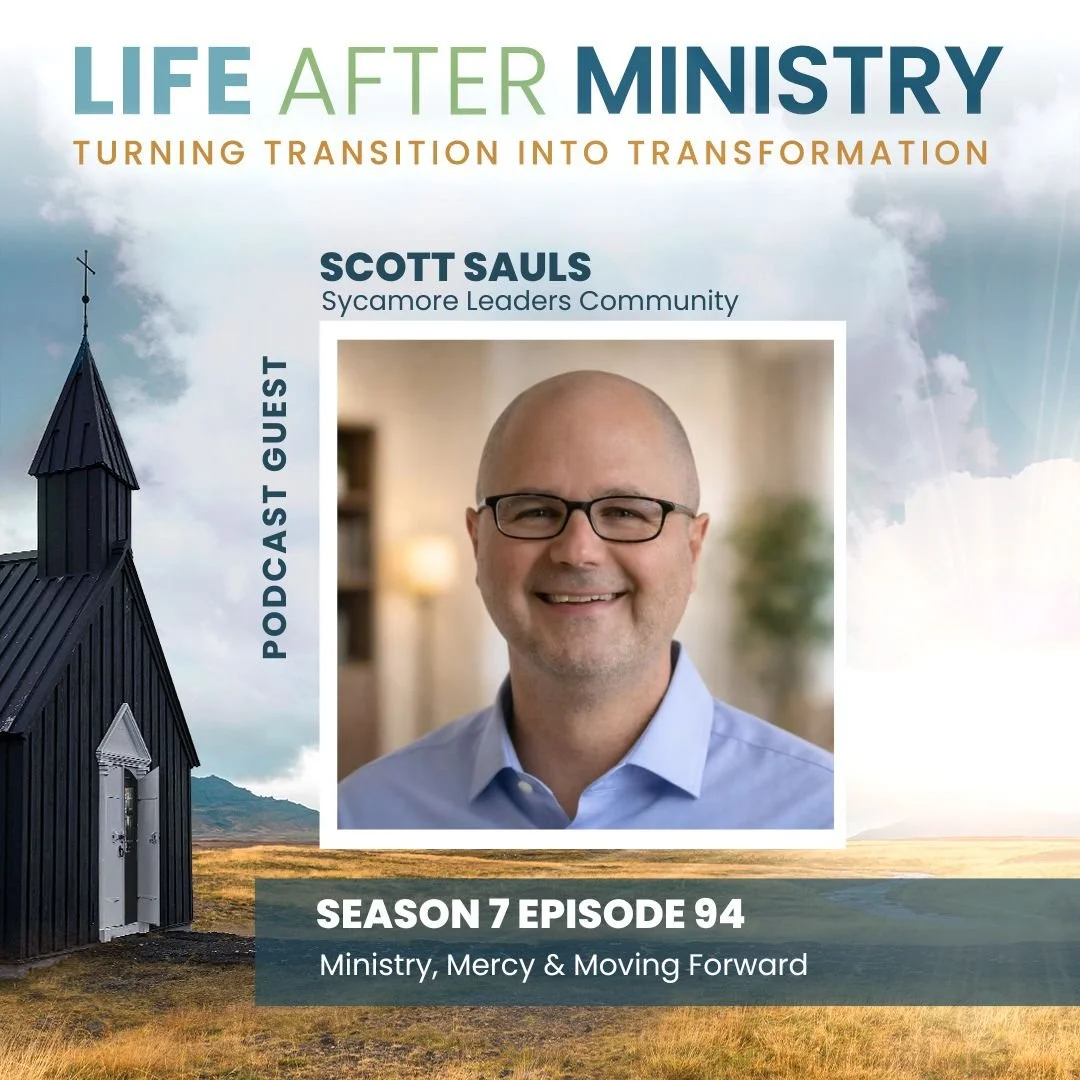
If this is a conversation you’re currently navigating, you may find it helpful to listen to the Life After Ministry podcast, where leaders and experts share real stories and practical wisdom for navigating transitions faithfully.

Matt Davis served as a Teaching and Executive Pastor for more than two decades in Orange County, California. After going through his own pastoral transition out of ministry, Matt learned the difficulty of this season. He helped start Ministry Transitions, a ministry committed to helping ministry leaders navigate transitions with grace. As President, he seeks to bring healing a reconciliation to churches and their people.